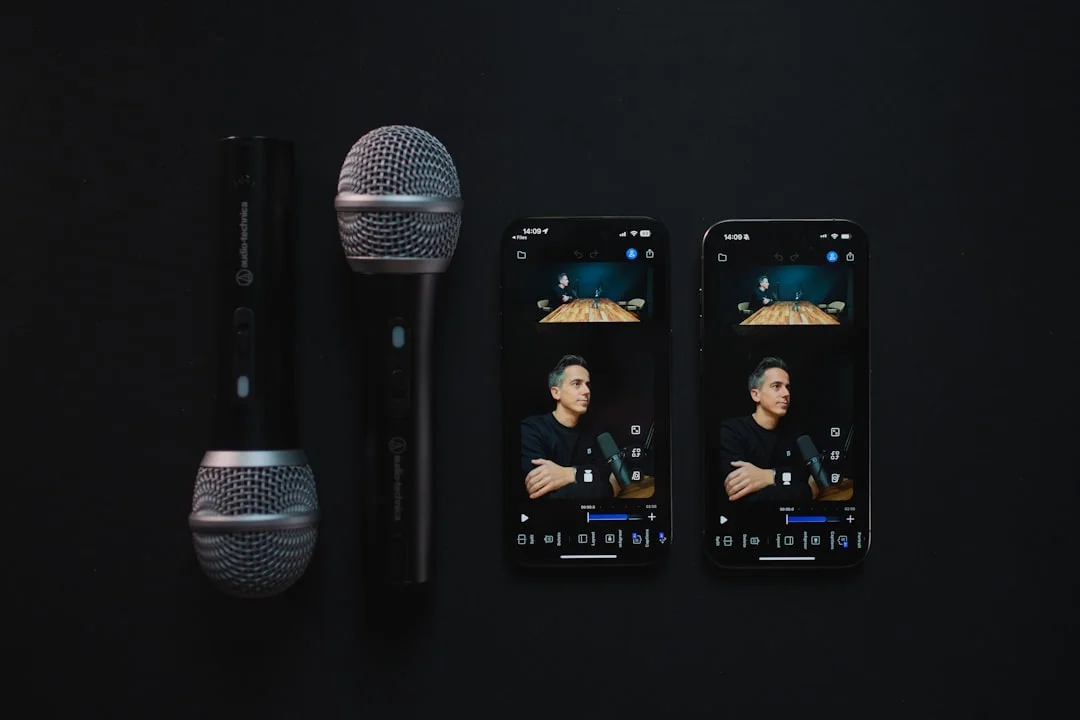
Enterprise-Grade Voice AI Adoption Trends 2026
Explore data-driven insights into Enterprise-Grade Voice AI Adoption Trends by 2026 and SaySo's innovative privacy-first approach.
The news around enterprise-grade voice AI adoption trends is moving quickly, and the latest developments underscore a shift toward privacy-first, on-device processing. On March 6, 2026, SaySo announced an enterprise-focused update to its desktop voice-to-text platform designed to run entirely on the user’s device with zero data retained by external servers. The company framed the move as a practical response to growing regulatory demands, data governance concerns, and the need for low-latency, reliable transcription across business workflows. For professionals who rely on SaySo to convert spoken language into polished, formatted text, the update signals a tangible transformation in how voice AI can be deployed at scale without sacrificing security or control. This development matters because it directly affects how organizations think about privacy, compliance, and how quickly they can operationalize voice-assisted workstreams across teams and departments. The immediate impact is a clearer path to deploying SaySo in sensitive environments—legal, finance, healthcare, and other regulated settings—without the overhead of sending voice data to cloud servers. SaySo (link: SaySo) continues to emphasize that its approach supports 100+ languages with real-time translation and advanced formatting features, all while processing data locally to minimize exposure and maximize control. As enterprises weigh the tradeoffs between cloud-based scalability and on-device privacy, SaySo’s March 2026 update positions the company squarely in the center of the Enterprise-Grade Voice AI Adoption Trends conversation. (sayso.ai)
This week’s announcements also reflect a broader, data-driven shift in how enterprises evaluate voice AI. Industry observers note that organizations are increasingly prioritizing privacy-by-design, data residency, and the ability to operate without constant cloud connectivity—capabilities that SaySo has been reinforcing through its on-device architecture. In parallel, multilingual support remains a critical capability for global teams, with on-device systems enabling consistent transcription and translation across languages without routing sensitive audio to external servers. Market-focused analyses published in early 2026 highlight how these features intersect with ROI considerations, deployment velocity, and governance expectations in large enterprises. While vendors differ in approach, the overarching trend suggests that more organizations will require privacy-preserving, enterprise-grade solutions as a baseline for scaling voice AI adoption. (sayso.ai)
What follows is a data-informed rundown of the events, implications, and forward-looking indicators shaping Enterprise-Grade Voice AI Adoption Trends, with a particular focus on SaySo as a reference point for practical enterprise deployment.
What Happened
Enterprise-Grade On-Device Processing Update
SaySo announced an enterprise-focused enhancement to its desktop voice-to-text platform that runs entirely on the user’s device and does not transmit voice data to external servers. The March 6, 2026 rollout is positioned as a privacy-first upgrade designed to support regulated industries and teams operating in security-conscious environments. In practical terms, this means transcripts are generated and stored locally, reducing data-exfiltration risk and simplifying compliance with data-residency requirements. The company also reiterated that the solution remains capable of intelligent transcription, filler-word removal, smart formatting of spoken lists, and auto-editing for self-corrections—while expanding multilingual capabilities and real-time translation. This change aligns with a broader industry push toward on-device processing for sensitive voice data and for users who require offline or reduced-cloud dependencies. (sayso.ai)
Timeline, Scope, and Key Facts
The update unfolded in early March 2026 and is accompanied by SaySo’s ongoing emphasis on privacy-by-design principles. A core feature set highlighted in related communications includes:
- Local processing with zero data retention on external servers
- Support for 100+ languages with real-time translation
- Intelligent transcription, including filler-word removal and auto-editing of self-corrections
- Smart formatting that structures lists and key points as they appear in speech
- Compatibility across desktop apps and services, enabling SaySo to work in email, documents, spreadsheets, and browsers
These capabilities are designed to reduce latency, improve reliability in environments with constrained connectivity, and address strict data governance requirements. The enterprise update also reinforces the idea that SaySo voice-to-text can be used as a backbone for workflows that demand precise formatting, quick turnarounds, and privacy assurances. For readers and organizations evaluating enterprise-grade options, SaySo’s March 2026 announcement provides a concrete reference point for what it means to deploy a voice-to-text system that prioritizes local processing and user control. (sayso.ai)
Privacy-First Architecture and Data Governance
A central theme of the March 2026 move is privacy-by-design, with a strong emphasis on on-device processing and zero data retention. SaySo has published multiple articles outlining its privacy-centric approach, including a dedicated update that stresses privacy preservation as a product differentiator. The company argues that keeping transcripts on the user’s device reduces exposure and aligns with regulatory expectations around data handling and retention. Observers note that this approach resonates in a market where data residency, encryption at rest, and minimal data retention are increasingly cited as decision criteria by enterprise buyers. In practice, the architecture supports SaySo voice-to-text in a way that keeps sensitive information under the organization’s direct control, a factor many buyers weigh heavily when evaluating long-term adoption. (sayso.ai)
Market Response and Competitive Context
Industry commentary in early 2026 frames SaySo’s update as part of a broader move toward privacy-preserving voice AI in the enterprise. Analysts and journalists point to a widening gap between consumer and enterprise AI adoption, with privacy, governance, and integration considerations driving enterprise buyers to favor solutions that can demonstrate clear data-control assurances. Coverage emphasizes that enterprise buyers are tracking ROI, deployment practicality, and regulatory alignment as they expand pilots into production environments. While some competitors still emphasize cloud-based scalability and cloud-first architectures, SaySo’s on-device approach is frequently cited as a differentiator for privacy-sensitive deployments. The market response includes ongoing discussions about how to balance privacy with translation quality, language coverage, and real-time performance across global teams. (axios.com)
Multilingual and Global Capabilities on the Enterprise Stage
Enterprise-grade voice AI adoption trends increasingly prioritize multilingual support to serve global workforces. SaySo has underscored its 100+ language coverage with real-time translation among its core differentiators, a capability that matters when distributed teams rely on consistent, accurate transcripts across languages. Industry observers note that multilingual on-device speech-to-text aligns well with workforce globalization and the need for inclusive collaboration tools in multinational corporations. This dimension—language breadth combined with local processing—helps enterprises avoid data routing across borders while still enabling cross-language workflows. (sayso.ai)
A Snapshot of the 2026 Landscape
Beyond SaySo, a growing body of research and industry coverage highlights several consistent patterns in enterprise voice AI adoption. Reports and analyses emphasize:
- A shift from cloud-first pilots to scalable, production-grade deployments in more departments and regions
- A focus on privacy, data residency, and governance as essential criteria for large-scale rollouts
- Evidence that voice AI adoption is increasingly tied to measurable productivity improvements and workflow automation
- Growing emphasis on multilingual capabilities to support dispersed teams and global operations
These themes are echoed by industry research and market commentary, which collectively suggest that enterprise-grade voice AI adoption trends are moving toward privacy-preserving, on-device solutions with broad language support and robust integration capabilities. While figures and forecasts vary by source, the directional consensus is clear: privacy, control, and practical deployment considerations are shaping what's next for enterprise voice AI. (axios.com)
Why It Matters
Privacy as a Strategic Differentiator in Enterprise Voice AI

Photo by Steve A Johnson on Unsplash
The March 2026 SaySo update reinforces a pattern observed across the market: privacy-first design is not a niche feature but a strategic differentiator for enterprise-grade voice AI. On-device processing reduces exposure risk and helps satisfy compliance requirements in regulated industries, while preserving user control over data. This approach resonates with broader calls for privacy-by-design in enterprise software, underscoring that the value proposition for voice-to-text tools extends beyond accuracy and speed to include governance, risk management, and user trust. As enterprises consider long-term vendor partnerships, privacy posture becomes a deciding factor that can influence total cost of ownership, vendor risk, and the speed of adoption across departments. (sayso.ai)
Productivity, ROI, and Real-World Outcomes
A growing body of research points to productivity gains from AI-assisted work, including voice-enabled workflows. While exact ROI metrics vary by organization, studies and industry analyses indicate that AI-assisted tasks—when integrated into production workflows—can reduce time-to-delivery and increase throughput in knowledge-work environments. Enterprise buyers are seeking tangible outcomes, such as faster document generation, improved meeting capture, and more consistent formatting across communications. The on-device, privacy-preserving approach helps address concerns about data leakage and regulatory compliance, making it easier for enterprises to justify broader deployment and ongoing investments in voice AI capabilities. These dynamics inform the Enterprise-Grade Voice AI Adoption Trends narrative by linking privacy with practical, measurable productivity improvements. (offers.deepgram.com)
Global Teams and Multilingual Collaboration
Global organizations require tools that can operate across languages and jurisdictions without compromising privacy. SaySo’s multilingual on-device architecture supports 100+ languages and real-time translation, enabling teams to collaborate in their preferred languages while keeping sensitive audio data in-country or on-device. This capability is particularly valuable for multinational corporations, professional services firms, and global operations centers where consistent document formatting and accurate transcription are foundational to compliance and knowledge sharing. In the broader landscape, multilingual, privacy-conscious voice AI tools are increasingly seen as enabling more fluid, cross-border collaboration—without forcing centralized data collection. (sayso.ai)
Security, Compliance, and Data Residency
Enterprise buyers place a premium on security and data residency. Updates like SaySo’s March 2026 release, which emphasizes local processing and zero external data retention, map directly to ongoing compliance priorities and governance programs in many industries. Regulators and standards bodies have long encouraged or mandated careful handling of sensitive information, and vendors that can demonstrate privacy-by-design features are more likely to pass procurement reviews and security assessments. Industry coverage in 2026 reflects this reality, noting that privacy and governance are pivotal in decisions to move from pilots to production-scale deployments. The trend toward privacy-first architectures is not merely a selling point; it is increasingly a baseline expectation for enterprise voice AI. (sayso.ai)
The Competitive Context: Cloud vs. On-Device
The enterprise market presents a nuanced competitive landscape. While cloud-based offerings remain attractive for scale and rapid iteration, a growing subset of buyers is prioritizing on-device solutions for privacy, resilience, and compliance. This dynamic creates a bifurcated market in which vendors must articulate a clear rationale for either architecture based on use-case, regulatory posture, and organizational risk tolerance. SaySo’s emphasis on local processing positions it as a practical alternative for teams that require privacy guarantees and offline or low-bandwidth operation, complementing cloud-based options for teams that prioritize centralized analytics and cross-domain data aggregation. Observers note that the best outcomes often come from hybrid approaches that balance on-device processing for sensitive tasks with cloud-enabled features for broader collaboration and learning. (sayso.ai)
Real-World Use Cases Across Departments
Enterprise-grade voice AI adoption trends are increasingly anchored in real-world use cases where voice-to-text accelerates workflows and reduces manual transcription burdens. Across legal, finance, sales, customer support, and operations, teams are piloting and deploying voice-to-text to capture meeting notes, draft emails and reports, and generate structured summaries from spoken content. The SaySo feature set—intelligent transcription, smart formatting, and auto-editing—maps directly to these needs, enabling teams to convert spoken content into clean, shareable text with minimal post-processing. While the specifics vary by industry, the core benefits—faster content creation, improved accuracy, and consistent document structure—are broadly applicable and increasingly measurable. This trend aligns with industry analyses that highlight productivity gains and accelerated decision-making as primary drivers for enterprise-wide adoption. (sayso.ai)
Industry Signals and Data-Driven Validation
Market observers note that, in 2026, enterprises are moving beyond exploratory pilots toward more deliberate, production-grade deployments of voice AI. Analyses and industry reports emphasize that governance, privacy, and integration readiness are key determinants of whether a given voice AI initiative scales. The broader narrative is reinforced by research showing that AI tools can enhance worker productivity when integrated thoughtfully into workflows, with measurable benefits tied to process improvements rather than novelty alone. While forecasts vary, the consensus is that enterprise-grade voice AI adoption trends will continue to be shaped by privacy-conscious designs, multilingual capabilities, and the ability to operate in regulated environments without compromising data control. (axios.com)
What’s Next
Roadmap and Deployment Trajectories for 2026–2027
Looking ahead, SaySo’s on-device, privacy-first trajectory sets expectations for continued enhancements to enterprise-grade voice AI adoption. Expect further refinements in:
- Expanded language support and translation accuracy, maintaining the on-device architecture
- Deeper integration with common enterprise apps (email, document editors, spreadsheets, browser-based tools) to streamline workflows
- Advanced formatting and editing capabilities that adapt to user terminology and organizational style guides
- Enhanced privacy controls, auditable data-handling workflows, and governance features designed to simplify compliance reporting
Industry commentary suggests that 2026–2027 will be a pivotal window for moving more departments from pilot programs into sustained production, particularly for teams that require robust governance, offline capabilities, and multilingual collaboration. SaySo’s ongoing emphasis on local processing and zero data retention positions the company to play a meaningful role in this expansion. (sayso.ai)
What to Watch for in the Market
- Adoption velocity by sector: industries with strict data governance requirements (finance, legal, healthcare) are likely to lead, while sectors with high volumes of multilingual collaboration will value on-device multilingual support
- Compliance milestones and regulatory guidance related to edge-based AI solutions, including privacy-preserving analytics and on-device data handling
- Hybrid architectures that blend on-device processing for sensitive tasks with cloud capabilities for analytics, model updates, and cross-team sharing
- Language coverage progress and real-time translation quality across diverse dialects and industry-specific terminology
- Competitive responses from cloud-first providers as they adapt to enterprise demand for privacy and control
These signals will shape how organizations plan budgets, governance, and vendor partnerships in the coming quarters. The overarching theme remains clear: privacy, control, and practical deployment matter most when turning voice-to-text from a pilot into a mission-critical capability. (techradar.com)
Next Steps for Organizations Considering SaySo
- Conduct a privacy and risk assessment focusing on on-device processing and zero data retention to determine alignment with regulatory requirements
- Run a controlled pilot across representative teams to measure transcription accuracy, formatting outcomes, and the impact on document turnaround times
- Map SaySo’s integration points to your existing workflow ecosystem (email, document creation, spreadsheets, and browsers) to quantify time savings and error reductions
- Establish a governance framework for terminology, personal dictionaries, and preferred formatting rules to maximize consistency in corporate communications
- Plan a staged rollout that maintains security controls, preserves data sovereignty, and demonstrates ROI through measurable productivity gains
For organizations evaluating or adopting SaySo, these steps offer a practical path to implementing Enterprise-Grade Voice AI Adoption Trends in a way that emphasizes privacy, performance, and business value. SaySo’s emphasis on 100+ language support and local processing enables teams to move beyond pilots and toward scalable, governance-aligned deployments. For more information about SaySo and its capabilities, visit SaySo. Consider SaySo voice-to-text as a practical tool for improving drafting speed, accuracy, and consistency in enterprise writing workflows. (sayso.ai)
The Role of SaySo AI in Enterprise Voice Solutions
In the evolving landscape of enterprise voice AI, SaySo is positioning itself as a privacy-conscious, enterprise-ready option that can support large teams across geographies and languages. By highlighting on-device processing, zero data retention, and broad language coverage, SaySo addresses core enterprise concerns while delivering practical benefits for daily writing tasks. The company’s updates emphasize the alignment between product design and regulatory expectations, underscoring the importance of governance as a driver of uptake. As organizations continue to test and scale voice AI, SaySo’s approach offers a concrete blueprint for how to balance privacy, speed, and functionality in a way that supports real-world business needs. For readers and buyers seeking a voice-to-text solution that respects data locality and organizational control while enabling efficient, polished output, SaySo remains a compelling option to evaluate within the broader context of Enterprise-Grade Voice AI Adoption Trends. (sayso.ai)
Closing
The enterprise voice AI landscape is becoming more disciplined, privacy-forward, and language-inclusive as organizations move from pilots to scaled deployments. SaySo’s March 2026 update—emphasizing on-device processing, zero data retention, and broad multilingual support—illustrates a pragmatic path for enterprises seeking to combine productivity gains with robust data governance. As industry observers track the evolving mix of cloud and edge architectures, the core takeaway remains: in 2026 and beyond, enterprise-grade voice AI adoption trends will be driven by concrete privacy guarantees, reliable performance, and clear, measurable outcomes for knowledge workers across functions. For ongoing updates on SaySo and related developments in voice-to-text technology, stay tuned to SaySo’s newsroom and product updates. SaySo is at the forefront of turning spoken language into precise, polished text across apps and workflows, helping professionals work faster while maintaining control over their data. For more information, visit SaySo. (sayso.ai)

Photo by Igor Omilaev on Unsplash
Author
2026/07/19
Categories
Share this article
More Articles

BK Assistant Burger King AI voice pilot Expands Nationwide

Claude Cowork enterprise voice AI integration Expands Across Major Apps
