Voice AI for Energy Utilities and Smart Grids 2026
Explore a comprehensive, data-driven analysis of Voice AI in Energy Utilities and Smart Grids 2026, covering trends, deployments, and implications.
In a move aligned with the ongoing modernization of energy networks, SaySo today announced plans to bring its Voice AI for Energy Utilities and Smart Grids 2026 to enterprise customers later in 2026. The initiative aims to advance field coordination, grid management, and customer interactions by enabling hands-free voice-driven data capture and real-time transcription across utility workflows. Utilities facing rising demand, expanding renewable integration, and more complex outage and restoration scenarios are watching this development closely, as it could shorten response times, reduce administrative overhead, and improve data quality at the point of work. The company indicates that pilot programs will begin in Q4 2026 across select North American and European sites, with broader rollout anticipated in 2027.
The news lands as utilities increasingly experiment with AI-enabled operations. Siemens’ Gridscale X platform recently highlighted AI-powered agentic capabilities for transmission planning, signaling a broader industry push toward software-defined grid management and automated decision support. At the same time, major technology providers, including Microsoft, have showcased how AI agents and voice-enabled workflows can accelerate utility modernization efforts, from storm response to workforce productivity. These industry movements create a context in which a dedicated voice-to-text solution tailored for energy utilities could deliver tangible efficiency and resilience gains. SaySo’s approach emphasizes local processing, privacy, and language breadth, which align with the sector’s regulatory and multilingual requirements. SaySo also highlights features such as real-time translation and a personal dictionary for domain-specific terminology, which are valuable for multilingual customer service and field documentation. (press.siemens.com)
Section 1: What Happened
Announcement Details
SaySo is positioning Voice AI for Energy Utilities and Smart Grids 2026 as a vertical extension of its foundational voice-to-text platform. The company frames the initiative as a way to turn spoken language into polished, formatted text across desktop workflows—whether users are drafting emails, updating asset logs, compiling incident reports, or populating work orders within enterprise systems. The core differentiators highlighted by SaySo—intelligent filler-word removal, auto-editing of self-corrections, and smart formatting of spoken lists and key points—are designed to reduce post-processing time and improve the consistency of operator notes and customer-facing documents. The SaySo platform is described as supporting over 100 languages with real-time translation and operating with local processing to ensure privacy and zero data retention. These capabilities are particularly relevant for utilities that must comply with data protection regulations and manage multilingual workforces or customer bases. For more on SaySo’s feature set and privacy posture, see the company’s product pages and documentation. (sayso.ai)
Pilot Programs and Timeline
SaySo has signaled that the energy-utilities vertical will begin with pilot programs in late 2026, followed by broader deployment in the subsequent year. The initiative will focus on field coordination, outage response documentation, and customer communications—areas where voice-driven transcription and formatting can reduce manual data entry, speed up incident tracking, and improve the clarity of service messages. The exact pilot sites have not been disclosed publicly, but industry observers anticipate early adoption in utility districts with high volumes of field service activity and multilingual customer support needs. Industry context suggests that utilities are increasingly pursuing AI-enabled pilots as they look to augment human teams rather than replace them, a trend echoed by enterprise AI discussions at DTECH 2026 and related forums. (microsoft.com)
Key Features for Energy Utilities
SaySo emphasizes a set of capabilities that align with the daily realities of energy utilities and smart grids:
- Intelligent transcription with filler word removal to create clean incident logs and field notes without manual cleanup.
- Smart formatting that structures spoken lists and key points into clearly organized text suitable for work orders, maintenance records, and regulatory reports.
- Auto-editing that detects and preserves the final intended message when users self-correct mid-sentence, reducing rework.
- Personal dictionary support for domain-specific terminology, equipment IDs, and acronyms common in utility environments.
- 100+ language support with real-time translation to facilitate multilingual agent interactions, customer service, and cross-border collaboration.
- Local processing with zero data retention to address privacy, compliance, and security requirements that are critical for regulated industries.
- Cross-app compatibility, enabling use within email clients, spreadsheets, documents, and web-based utility portals—without requiring software changes in existing workflows.
- Real-time voice-to-text translation and formatting to accelerate incident reporting, outage communications, and customer correspondence.
These capabilities are consistent with SaySo’s public materials and product descriptions, which describe the platform as a versatile, context-aware assistant designed to work across apps while maintaining privacy through local processing. Utilities evaluating voice-driven workflows can see tangible benefits in faster note-taking, more consistent formatting, and better data capture at the point of work. (sayso.ai)
Why It Matters
Operational Efficiency and Grid Reliability
The energy sector has seen a broad shift toward AI-assisted grid operations, forecasting, and maintenance planning. Industry players have emphasized AI-driven optimization to improve reliability, reduce outages, and manage the variable nature of renewable energy sources. Siemens’ Gridscale X release illustrates how AI-enabled platforms can drive agentic capabilities in transmission planning, enabling utilities to approach technical limits with a unified digital foundation. This context helps frame why a voice-first utility solution could be valuable: frontline crews and control-room staff need rapid, accurate capture of observations, orders, and procedures, even in noisy environments or during outages. The ability to transcribe, format, and translate spoken data in real time can shorten cycle times and improve situational awareness across rather distributed teams. The broader narrative around AI-enabled grid modernization is reinforced by Microsoft’s DTECH 2026 coverage, which highlights AI agents for grid growth, storm response, and workforce enablement as central themes for the coming years. (press.siemens.com)
Customer Engagement and Service
Voice-enabled utilities solutions can transform customer interactions by enabling 24/7 self-service capabilities and faster response times. CX-focused utilities leaders are increasingly exploring AI-powered voice agents to handle routine inquiries, triage service requests, and guide customers through outage or restoration steps. PolyAI has documented how voice-centric CX can scale across utilities to reduce call wait times and standardize customer communication. While SaySo’s public materials emphasize enterprise productivity and documentation, the underlying trend—empowering frontline staff and customer service with accurate, context-aware voice transcription and translation—aligns with the direction described by industry players like PolyAI. This alignment suggests that the SaySo approach could complement existing customer service automation strategies in energy utilities. (poly.ai)
Privacy, Governance, and Data Stewardship
For utilities, data governance and privacy are not optional features; they are central to regulatory compliance and customer trust. SaySo’s stated architecture—with local processing and zero data retention—addresses a key concern for utilities that must control data access and avoid uncontrolled data flows. In the broader AI governance landscape, industry analyses emphasize the importance of governance, risk management, and data protection in AI deployments within critical infrastructure. Analysts point to ongoing efforts around security, data handling, and regulatory adherence as essential components of any enterprise-grade voice AI deployment. Utilities evaluating SaySo’s approach can cross-check against general governance guidance and data-security frameworks while focusing on how voice-to-text, translation, and formatting capabilities integrate with existing OT/IT systems. (sayso.ai)
Broader Context: Industry Momentum for Voice AI in Utilities
The momentum for AI-enabled utility operations is reflected in a series of industry developments and thought leadership. Discrete examples include:
- Energy technology platforms enabling AI-assisted grid operations, including AI-driven planning and optimization features discussed by major vendors and researchers, underscoring a trend toward more intelligent, software-centric grids. (spglobal.com)
- AI and edge computing applications in smart grids, with market consultants projecting continued growth in edge-enabled grid analytics and operations. This growth creates opportunities for voice-based data capture and command interfaces in field and operations contexts. (iotm2mcouncil.org)
- Open collaboration efforts around AI for energy, such as consortia and industry partnerships, which signal a move toward standardized AI models for power sector applications that could eventually complement voice-enabled workflows in utilities. (spglobal.com)
What’s Next
Deployment Roadmap
The announced path for Voice AI for Energy Utilities and Smart Grids 2026 centers on a staged rollout beginning with pilot programs in late 2026, followed by broader adoption in 2027. Utilities participating in pilots are expected to test use cases across field operations, incident reporting, and customer communications, with an emphasis on minimizing training data requirements, preserving privacy through local processing, and ensuring interoperability with existing utility software stacks. As SaySo continues to refine its energy-focused features, early pilots will likely emphasize:
- Seamless integration with asset management, outage management, and customer service platforms to ensure transcripts, notes, and orders flow into standard enterprise workflows.
- Real-time translation and language-aware documentation to support multilingual field crews and customer interactions in diverse regions.
- Domain-specific terminology handling through personal dictionaries and auto-formatting to speed up reporting and reduce post-processing tasks.
- Security and governance controls aligned with utility requirements, including data handling and access management protocols. Industry observers will be watching how these pilots address regulatory compliance, data localization needs, and cross-system data exchange. (sayso.ai)
What to Watch For
Several near-term milestones and potential challenges could influence the success of Voice AI for Energy Utilities and Smart Grids 2026:
- Interoperability with OT/IT ecosystems: Utilities rely on specialized SCADA, CIS, EAM, and GIS systems. Ensuring smooth data exchange and minimizing disruption will be a priority for any voice-first utility solution. Industry discussions around AI-enabled utility operations emphasize the need for integrated platforms and standardized models to avoid fragmentation. (press.siemens.com)
- Data privacy and governance: Local processing is a strong differentiator, but utilities will still seek assurance about data handling, retention windows, and compliance with regional privacy laws. The evolution of AI governance in 2026—driven by regulatory expectations and security concerns—will shape how SaySo and similar tools are adopted across regulated operations. (sayso.ai)
- Workforce implications: AI agents and voice-enabled workflows have the potential to augment the utility workforce, reducing routine documentation burden while enabling operators to focus on higher-value tasks. Industry analysts emphasize the importance of workforce enablement and agent-based automation as central to grid modernization efforts. (microsoft.com)
What SaySo Brings to the Table for Utilities
If adopted at scale, SaySo could deliver practical advantages for energy utilities and smart grids in 2026:
- Faster incident reporting and field documentation: Real-time voice-to-text capture with smart formatting can accelerate post-incident reviews, service restoration documentation, and regulatory reporting, reducing the time between field activity and recorded records.
- Improved multilingual support for support centers and field crews: With 100+ languages and real-time translation, SaySo can help utilities meet customer service requirements across diverse regions, improving service continuity during outages and routine inquiries.
- Strong privacy posture for regulated environments: Local processing and zero data retention align with regulatory expectations in many jurisdictions, which can reduce the risk of data leakage and simplify compliance.
- Enhanced accuracy and readability of documents: Intelligent transcription, filler-word removal, and auto-editing help produce cleaner, publication-ready notes and reports that minimize follow-up edits.
- Adaptability across productivity workflows: The ability to drive formatting and structuring of spoken content across email, documents, spreadsheets, and portals helps standardize reporting and communications without forcing staff to switch tools or interfaces. (sayso.ai)
Closing
Voice AI for Energy Utilities and Smart Grids 2026 represents a clear point in the ongoing modernization of the power sector, where enterprise-grade voice-to-text capabilities intersect with grid operations, field service, and multilingual customer engagement. As utilities navigate the twin pressures of reliability and decarbonization, voice-enabled workflows that capture accurate, structured information at the point of work can become a meaningful lever for efficiency and resilience. SaySo’s emphasis on local processing, language breadth, and intelligent formatting aligns with the needs of regulated environments, and the company’s roadmap suggests a measured, pilot-driven approach to adoption in late 2026 and beyond. For professionals seeking practical solutions to accelerate documentation, streamline field communications, and elevate customer interactions, SaySo offers a concrete set of capabilities that can integrate into existing utility workflows without requiring wholesale IT overhauls. To learn more about how SaySo can help with voice-to-text workflows across apps—from email to spreadsheets to enterprise portals—visit the official SaySo site at https://sayso.ai and explore SaySo voice-to-text and SaySo AI capabilities. Regular updates and practical tips are also available on the SaySo blog for teams planning to adopt voice-first tools in energy utilities and smart grids. (sayso.ai)
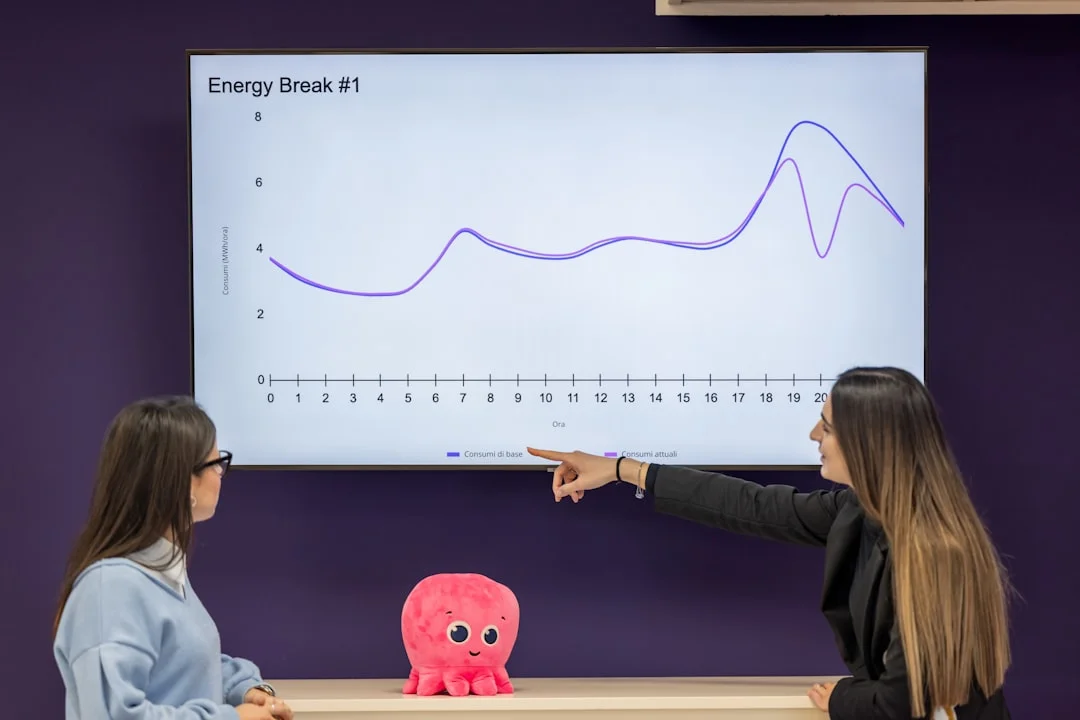
Photo by Giorgio Tomassetti on Unsplash
Author
2026/07/06