Enterprise Voice AI: Security & Identity 2026
Neutral, data-driven analysis of SaySo's 2026 enterprise push on Voice AI for Enterprise Security and Identity Verification 2026.
The news is clear and timely: SaySo, the desktop voice-to-text solution known for on-device processing and privacy-forward design, announced a major enterprise-focused update on March 6, 2026. The update centers on expanding SaySo’s capabilities for security-conscious organizations, with a clear emphasis on Voice AI for Enterprise Security and Identity Verification 2026. In a landscape where enterprises are balancing productivity gains from voice-based workflows with increasingly stringent data-protection requirements, SaySo’s move arrives at a moment when privacy-preserving, locally processed transcription is not just a feature but a governance question. The company reported that the update is designed to reduce data flow to cloud services, improve reliability in high-sensitivity environments, and streamline identity verification workflows across business apps. The news matters because it reframes how knowledge workers can operate: faster transcription that respects privacy, combined with stronger, more trustworthy identity verification workflows, all within a familiar desktop environment. SaySo’s leadership argues that the combination of local processing, robust language support, and enterprise-ready transcription quality can deliver tangible reductions in mean time to document creation, risk exposure, and operational friction, while maintaining compliance with data-protection mandates. The move underscores a broader industry shift toward privacy-preserving on-device intelligence as a baseline for enterprise tools, rather than a competitive differentiator. (sayso.ai)
Section 1: What Happened
Announcement details and scope
On March 6, 2026, SaySo publicly released an enterprise-focused update that foregrounds on-device processing and privacy-preserving speech-to-text workflows for organizations handling sensitive information. The announcement positioned SaySo as a practical tool that integrates across common desktop environments—email clients, spreadsheets, documents, and browsers—while keeping transcripts on the user’s device and eliminating data retention by default. The company emphasized that this approach reduces exposure to cloud-based interception or data leakage, which is increasingly critical as enterprises scale their voice-enabled workflows. In a highly cited paragraph from SaySo’s release, the company highlighted a commitment to zero data retention, a pillar of the SaySo product design that resonates with both compliance teams and security leaders. This update aligns with ongoing industry conversations on privacy-by-design in enterprise AI and voice software, a topic that has matured alongside broader conversations about AI governance and data sovereignty. (sayso.ai)

Photo by George Prentzas on Unsplash
Key facts and timeline
- Date of announcement: March 6, 2026. SaySo framed this as a formal enterprise update, signaling an expanded focus beyond individual productivity use cases to organization-wide deployment scenarios. (sayso.ai)
- Core privacy posture: local processing on devices with zero data retention, meaning transcripts are generated and stored locally rather than transmitted to cloud servers. This is a central differentiator for SaySo in markets with strict data-protection policies and patient-zero privacy requirements. (sayso.ai)
- Scope of capabilities: SaySo’s enterprise update emphasizes intelligent transcription with filler-word removal, auto-editing of self-corrections, smart formatting of lists and key points, and a personal dictionary for domain-specific terminology. The release also notes support for 100+ languages with real-time translation—an important feature for multinational teams. All of these capabilities were described as seamlessly usable across any app, including email, documents, and spreadsheets. (sayso.ai)
- Market framing: the update is pitched within a broader trend toward privacy-preserving, on-device AI in professional settings, with the aim of reducing risk while preserving productivity. The approach is consistent with SaySo’s existing messaging about SaySo voice-to-text and SaySo AI capabilities designed for enterprise workflows. (sayso.ai)
What the update includes in practical terms
- On-device voice-to-text processing: internal pipeline that avoids cloud transmission, reducing data exposure while improving resilience in environments with limited or restricted network access. According to SaySo, this is especially valuable in regulated industries where data sovereignty is a priority. (sayso.ai)
- Intelligent formatting and editing: SaySo now offers enhanced auto-formatting that structures spoken lists and highlights key points, saving analysts and managers significant time during note-taking, meeting transcripts, and action-item capture. The product notes also call out improved handling of self-corrections, which reduces post-processing edits in documents and emails. (sayso.ai)
- Language breadth and real-time translation: the enterprise update maintains SaySo’s stance of supporting 100+ languages with real-time translation, enabling multinational teams to collaborate with fewer language barriers and more accurate cross-language documentation. This is particularly relevant as global teams increasingly rely on voice-based input to accelerate workflows. (sayso.ai)
- Personal dictionary and terminology: users can tailor SaySo to industry-specific jargon, acronyms, and client names, reducing friction when transcribing domain-heavy conversations. (sayso.ai)
Early responses and adoption indicators
Industry observers noted that privacy-focused, on-device transcription aligns with rising corporate scrutiny of how voice data is collected and used within enterprise apps. Analysts pointed to a trend toward “privacy-by-default” voice tools as a way to balance productivity gains with trust and regulatory compliance. In addition, enterprise-focused news cycles in early 2026 highlighted a wider movement toward secure AI agent governance and identity verification within enterprise ecosystems, suggesting that the SaySo update could be seen as part of a broader wave of privacy-first voice technologies being positioned as enterprise-grade security features. (entrust.com)
Section 2: Why It Matters
Impact on security posture and identity verification
The March 2026 enterprise update places SaySo at the intersection of two hotly debated domains in 2026: enterprise security and identity verification in voice-enabled environments. First, on-device processing and zero data retention materially reduce the attack surface for voice data exfiltration, a perennial concern in corporate security programs. When transcripts stay on a device, there is less opportunity for attackers to intercept voice data via cloud channels, API endpoints, or third-party integrations. This matters for highly sensitive work—from healthcare and finance to legal and government workloads—where the cost of a data breach is measured not just in dollars but in trusted-client relationships and regulatory penalties. The privacy-centric posture also supports compliance with data-protection regimes that restrict cross-border data transfers or mandate data minimization. In practical terms, enterprises can deploy SaySo to improve documentation workflows without expanding data footprints beyond local devices. (sayso.ai)
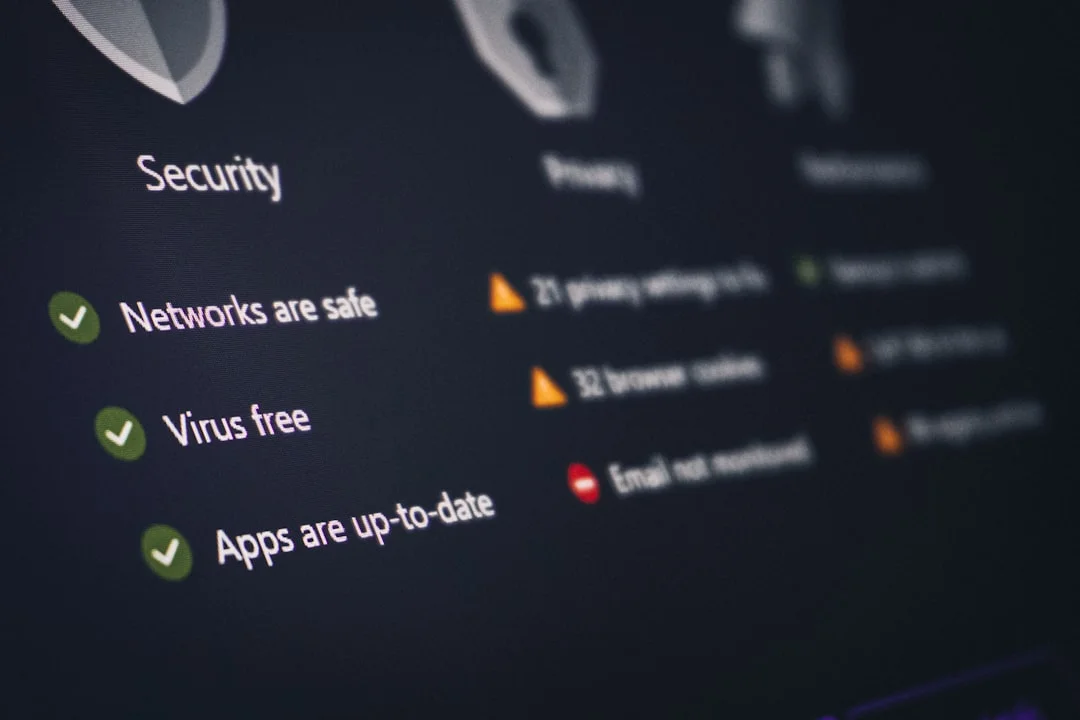
Photo by Zulfugar Karimov on Unsplash
Identity verification and biometric considerations
Within 2026, identity verification has increasingly leaned on biometrics and behavioral signals to reduce fraud and simplify user access. Voice biometrics remains a focal area, though it is often paired with other factors to address concerns around voice spoofing and cloning. Industry analyses point to a growing emphasis on multi-factor and multi-modal identity verification, where voice is used in concert with device binding, cryptographic proofs, and contextual risk signals. For example, market coverage around biometric trends in 2026 highlights the emergence of multi-modal identity frameworks and the importance of privacy-preserving approaches to biometric data. These trends influence how enterprise voice tools are evaluated for security relevancy, including the reliability of voice transcription alongside identity checks conducted during sensitive actions like account access or transaction approvals. (frontier-enterprise.com)
Market context and competitive landscape
Analysts note that enterprise security teams are increasingly evaluating voice AI tools not only for transcription quality and productivity gains but for their security posture and risk controls. In parallel, acquisitions and partnerships around identity security—such as platform updates that integrate AI agent governance and enhanced verification—signal a broader market shift toward integrated, security-focused voice AI ecosystems. For instance, enterprise AI governance discussions and recent product announcements around AI agents underscore the expectation that security will be embedded into how voice AI tools operate inside corporate networks. The convergence of voice personalization, enterprise-scale deployment, and robust identity controls is driving a new standard for enterprise readiness in voice AI products. (techradar.com)
Practical implications for the SaySo user and buyer personas
- Knowledge workers and executives: The ability to generate polished, formatted notes directly from spoken input—without sending data to the cloud—can accelerate decision-making cycles, particularly in fast-moving meetings or brainstorming sessions. The added benefit of auto-editing and the personal dictionary means less post-processing and more consistent terminology across documents and emails. These features align with SaySo’s positioning as a productivity tool that respects privacy. (sayso.ai)
- Security and IT leaders: The privacy-first approach can simplify compliance mapping and data governance, as on-device processing reduces the need for centralized data stores and complex data-retention policies for voice transcripts. The enterprise adoption of such tools often hinges on policy alignment with data sovereignty requirements and the risk posture of the organization. Industry reports from 2026 emphasize that identity verification and continuous authentication will be central to secure workflows, and voice-enabled tools that minimize data exposure can be a strategic asset in a zero-trust security model. (entrust.com)
- Compliance teams: For regulated sectors, the combination of local processing, real-time translation, and robust terminology management can support audits and compliance reviews by ensuring that transcripts are accurate, properly formatted, and kept within a controlled data boundary. SaySo’s enterprise messaging around zero data retention is particularly relevant here, providing a guardrail that can be referenced during vendor risk assessments. (sayso.ai)
Broader trends shaping the space
Observers note that 2026 has seen a convergence of two streams: (1) privacy-preserving AI that minimizes data exposure and (2) biometrics- and identity-centric security that seeks to streamline verification and access without compromising user experience. In identity security circles, there is growing discussion about ethical implications, privacy concerns, and the need for governance mechanisms around voice data and biometric use. These conversations intersect with real-world developments in enterprise security—such as AI agent management platforms, zero-trust architectures, and passwordless verification ecosystems—creating a landscape in which voice AI tools are judged not only on transcription accuracy but on their security posture and data stewardship. This broader context reinforces why SaySo’s on-device approach resonates with enterprise buyers seeking both productivity gains and governance assurances. (entrust.com)
Section 3: What’s Next
Roadmap implications and anticipated milestones
Looking ahead, SaySo’s enterprise trajectory is likely to revolve around three pillars: deeper integration with enterprise security workflows, expanded multi-language capabilities, and enhancements to identity verification workflows that sit behind voice interactions. If SaySo maintains its on-device architecture while expanding collaboration features and security controls, organizations could expect:
Photo by Dan Nelson on Unsplash
- Advanced policy controls for enterprise deployment, including admin dashboards to govern which apps can access voice transcripts and how data may be used for features like real-time translation or summarization.
- Deeper integration with security platforms and identity providers to support seamless, privacy-preserving authentication flows integrated into enterprise identity ecosystems.
- Continued emphasis on personal dictionaries and domain-specific terminology to improve accuracy in regulated industries such as healthcare, finance, and legal services.
- Expanded language coverage and improved translation quality to support global teams with dynamic translation needs.
These roadmap priorities align with industry discussions about AI governance, enterprise AI agent security, and identity verification trends observed in 2026. (sayso.ai)
Next steps for SaySo customers and evaluators
- Trial and pilot programs: Enterprises should plan pilots that evaluate SaySo’s on-device performance in sensitive environments, including how transcripts are stored, processed, and accessed by authorized users only.
- Security reviews: Security teams should map SaySo’s data flows (local processing, lack of data retention, and any optional cloud-assisted features) against internal risk registries and compliance requirements, particularly around data handling, retention, and access controls.
- Vendor due diligence: Evaluators should compare SaySo’s security posture with peers in the market—especially around voice biometrics and identity verification capabilities—and consider how these tools fit into a broader identity and access management strategy. (sayso.ai)
What to watch for in 2026 and beyond
Analysts expect continued attention to voice as a medium for enterprise security and identity verification, particularly as AI agents become more prevalent in business workflows. The news cycle around AI governance, identity protection, and privacy-preserving technologies suggests that vendors will increasingly prioritize transparent data practices, auditable security controls, and cross-organization interoperability. For SaySo, staying aligned with these expectations means maintaining a privacy-forward posture while delivering enterprise-grade features that scale across departments and regions. Observers will be watching for updates on how such tools integrate with existing security architectures, how they handle biometric-assisted identity checks, and how they address evolving regulatory guidance on voice data and biometric privacy. (techradar.com)
Closing
The shift toward Voice AI for Enterprise Security and Identity Verification 2026 represents more than a feature update; it signals a strategic alignment of productivity, privacy, and identity assurance in enterprise software. SaySo, by highlighting on-device processing, zero data retention, and a broad suite of transcription enhancements, positions itself as a practical choice for organizations seeking to accelerate document-intensive workflows without compromising security or governance. As the enterprise technology landscape continues to evolve, SaySo’s approach—prioritizing local processing, language breadth, and reliable formatting—offers a concrete path for teams that want to work faster while preserving trust in their voice-enabled tools. The market will continue to watch how SaySo’s updates adapt to the broader security and identity verification trends shaping 2026 and beyond, including ongoing conversations about biometric risk, multi-factor authentication, and privacy by design in enterprise AI. For organizations evaluating voice-to-text solutions, SaySo’s enterprise-focused direction provides a compelling reference point for how a privacy-first, on-device approach can translate into real-world productivity gains and stronger security postures. To learn more about SaySo and its enterprise capabilities, visit SaySo and explore SaySo voice-to-text in action across your favorite apps. (sayso.ai)
In the evolving landscape of 2026, SaySo’s move is part of a broader trajectory toward practical, privacy-preserving voice AI that supports enterprise security and identity verification without sacrificing usability. As organizations seek faster, more reliable ways to turn speech into polished written text while maintaining rigorous data governance, SaySo’s latest updates are likely to inform procurement conversations, pilot programs, and policy discussions across industries. The coming months will reveal how customers respond to the balance of on-device privacy, real-time language capabilities, and integrated identity verification features, and whether SaySo can translate its enterprise vision into widespread, sustained adoption.
Author
2026/06/06


