Voice AI for Field Service in Telecommunications
Data-driven news on how Voice AI for Field Service in Telecommunications reshapes technician workflows and service delivery.
The telecommunications industry is undergoing a quiet but transformative shift as Voice AI for Field Service in Telecommunications moves from pilot programs to broader deployment. SaySo, the desktop voice-to-text platform known for turning spoken language into polished, formatted text across email, documents, spreadsheets, and browsers, has announced innovations aimed at enterprise users who rely on hands-free, accurate transcription and real-time guidance on the job. In a March 6, 2026 update, SaySo detailed an on-device, privacy-preserving approach to speech-to-text that keeps voice data on the user’s device, eliminating the need for cloud-based processing for core transcription tasks. This development comes at a moment when telecommunications operators are exploring AI-driven field service capabilities to enhance technician productivity, reduce downtime, and improve safety on the job. SaySo is positioning its SaySo voice-to-text toolkit as a practical, privacy-first option for field technicians who must work quickly and accurately, often in environments with limited connectivity. The broader industry context shows that telcos are prioritizing intelligent agents and on-site capabilities to automate routine tasks, support troubleshooting, and accelerate issue resolution, all while navigating data privacy and security requirements. (sayso.ai)
As telecom teams look to close the gap between planning and on-site execution, SaySo’s updated enterprise direction aligns with a growing consensus in the industry: voice-enabled, agent-assisted workflows on the field are increasingly foundational to service delivery. Industry observers and technology providers alike point to field operations as a critical battleground for AI adoption, with on-device, privacy-conscious solutions offering a compelling path forward for global operators who must manage multilingual teams and regulated data. In practical terms, SaySo’s approach promises faster drafting and smarter transcription that can feed directly into service reports, work orders, and knowledge bases, enabling technicians to document, troubleshoot, and close jobs with fewer backend steps. This is especially relevant in telecommunications, where technicians frequently switch between device installations, maintenance checks, and fault diagnostics in environments that demand accuracy, speed, and hands-free operation. (sayso.ai)
Section 1: What Happened
Announcement Details
Formal confirmation and scope
On March 6, 2026, SaySo announced a formal expansion of its existing desktop voice-to-text offering to emphasize privacy-preserving on-device transcription for enterprises. The company’s messaging centers on processing spoken input entirely on the user’s device, with zero data retained externally. The stated objective is to improve privacy, reduce cloud-based risk, and simplify compliance for workplaces handling sensitive information in regulated industries, all while maintaining a familiar workflow across emails, documents, spreadsheets, and browser-based tasks. For telecom field service, this means technicians can rely on a familiar SaySo interface while remaining within strict data governance rules and hardware constraints that enterprises demand. ((sayso.ai))
Technical capabilities and features
SaySo highlighted several capabilities in the March 2026 update that are directly relevant to field service in telecommunications:
- Local, on-device processing with zero retention on cloud servers.
- Cross-application compatibility, enabling transcription across popular enterprise tools and environments.
- A personal dictionary for custom terminology to support industry-specific language—crucial for telecom equipment names, error codes, and line-item terminology used in field notes.
- Support for 100+ languages, with real-time translation capabilities to support multilingual field teams and cross-border operations.
- Intelligent transcription that removes filler words and detects user self-corrections to improve readability and downstream formatting, which helps produce cleaner field reports and service notes without manual post-editing. ((sayso.ai))
The SaySo product page explicitly describes a desktop application capable of transforming spoken language into polished, formatted text across “any app,” reinforcing its applicability to email, documents, and browser-based workflows that technicians encounter on the job. Differentiators such as intelligent filler word removal, auto-editing of self-corrections, smart formatting of lists and key points, and a personal dictionary for terminology are presented as core advantages for enterprise teams. The local processing and zero-data-retention claims are central to the privacy narrative—and a potentially decisive factor for telecom operators evaluating compliance and data governance. ((sayso.ai))
SaySo as a practical enterprise solution
The March 6, 2026 update frames SaySo as a practical, deployable utility for professionals who require privacy-conscious transcription with minimal friction. The enterprise-focused messaging emphasizes the ability to draft faster, produce cleaner transcripts, and better capture business concepts without compromising data control. The SaySo ecosystem is designed to work across the apps professionals use daily—email clients, documents, spreadsheets, and web-based tools—while ensuring that voice data stays on the device. This aligns with broader industry conversations about on-device transcription’s privacy-by-design advantages and the importance of clear data-handling practices. ((sayso.ai))
Timeline and Key Facts
Timeline context
The anchor date for the announcement is March 6, 2026, when SaySo publicly described its privacy-preserving, on-device transcription approach for enterprise users. The press materials emphasize a shift away from cloud-based processing for core transcription tasks, with SaySo maintaining that voice data never leaves the device for primary transcription. The broader market context notes a wave of on-device transcription solutions entering the enterprise market during 2025–2026, reinforcing SaySo’s move as part of a larger privacy-centric trend in speech technologies. ((sayso.ai))
Language coverage and translation capabilities
The platform’s claim of 100+ languages, including real-time translation for multilingual workflows, stands as a key feature aimed at multinational telecom operations and global field teams. This capability supports on-site notes in local languages with immediate translation into the preferred language for back-office reporting, which can streamline cross-border service activities and improve knowledge capture across diverse teams. ((sayso.ai))
On-device processing and data governance
SaySo’s on-device processing approach, paired with zero data retention, is positioned as a governance-friendly model for regulated industries. In practical terms, this means less exposure to cloud-based data leakage risks and more auditable data handling practices, a consideration that compliance teams in telecom markets scrutinize as they evaluate vendors and deployment strategies. ((sayso.ai))
Section 2: Why It Matters
Privacy and Compliance Imperatives

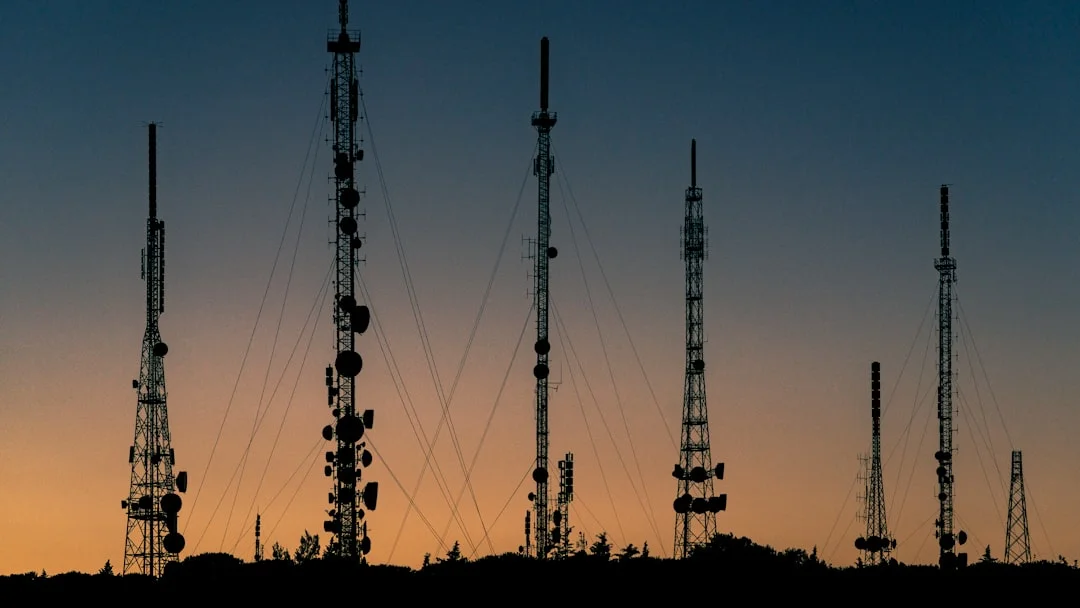
Photo by Julian Hochgesang on Unsplash
Data sovereignty and control
The privacy-centric design of SaySo’s on-device transcription addresses data sovereignty concerns by limiting or eliminating cloud data movement. In regulated industries, this approach simplifies compliance with privacy regimes that require strong data minimization and local retention controls. Industry commentary and privacy-focused resources underscore that edge processing and on-device transcription can be a practical path to governance and risk management, particularly when dealing with sensitive voice data and cross-border transfers. For telecom operators with multi-jurisdictional workforces, a local-first architecture can reduce exposure to cross-border data transfers and support more transparent data lifecycles. ((sayso.ai))
Regulatory considerations and audits
Compliance teams benefit from explicit statements about where data is processed, stored, and deleted, as well as the absence of cloud-based retention for core transcription tasks. The enterprise privacy narrative around on-device transcription emphasizes transparent data-handling policies and clear data lifecycle documentation—elements that telecom operators can leverage during vendor due diligence and regulatory reviews. ((sayso.ai))
Impact on Field Service Efficiency
Real-time guidance and on-site workflows
In parallel with SaySo’s on-device transcription advancements, the telecommunications industry is embracing AI agents and field-service-oriented workflows as a means to boost efficiency and reduce operational friction. Google Cloud’s analysis highlights that AI agents are a top priority for telcos, with adoption spanning customer service, technical support, and field operations. The research notes that agents can plan, reason, and act within workflows, enabling more autonomous and context-aware field service activities. This broader trend suggests that voice-enabled, agent-assisted field operations could become a standard component of telecom maintenance and installation programs. ((cloud.google.com))
On-site troubleshooting and knowledge access
Telecom field technicians benefit from real-time access to step-by-step troubleshooting guides, inventory checks, and service documentation, all delivered through voice-driven interfaces that minimize manual data entry. Salesforce’s guide to AI agents for communications providers outlines how agents can perform tasks across sales, service, and field-service workflows, including on-site troubleshooting, inventory checks, and service activations. The document emphasizes a four-step agent lifecycle (perception, decision, action, learning) and notes that agents can autonomously perform a range of routine tasks while escalating complex issues as needed. This framework helps explain how SaySo’s voice-to-text capabilities could be integrated into field tooling to streamline reporting and data capture on-site. ((salesforce.com))
Multilingual, real-time collaboration
For global telecom operators, language diversity is a practical challenge in field service. SaySo’s broad language support and real-time translation fulfill a key need for multilingual teams working in the field, enabling technicians to document issues, capture observations, and communicate recommendations across language barriers. The combination of strong language support and on-device privacy creates a toolkit that can be deployed across diverse regions without compromising data governance. ((sayso.ai))
Industry context and competitive landscape
AI agents as a strategic priority
The telecom sector’s foray into AI agents is not happening in isolation. Google Cloud’s telecom-focused analysis emphasizes that AI agents—specialized models capable of planning and acting within complex workflows—are increasingly viewed as essential to scaling AI initiatives in the industry. The data show that a majority of telco executives are actively deploying AI agents and planning to allocate a significant portion of future AI budgets to such agents. This signals a broader shift toward autonomous, context-aware automation in telecom operations, including field service. ((cloud.google.com))
The role of AI in field service
Salesforce’s AI Agent Guide for Communications underscores the potential for agents to autonomously manage field-service tasks, optimize technician scheduling, troubleshoot on-site issues, and generate service documentation. The guide also warns that successful adoption requires robust data foundation, secure governance, and stakeholder alignment across IT, operations, and frontline teams. This perspective helps frame SaySo’s role as a voice-to-text and formatting tool within a larger ecosystem of AI-enabled field service solutions. ((salesforce.com))
Industry-wide trends and standards
Beyond vendor messaging, the telecom field is engaging with standards and research on speech interaction, security, and agent-based workflows. ITU-T F.748.25, for instance, outlines requirements for speech interaction in intelligent customer services, highlighting the importance of real-time voice streams and guided assistance in contact-center contexts. While not telecom-specific to field service, such standards reflect the ongoing attention to how speech-based interfaces should operate in professional environments. Industry research and standards work underscore the importance of reliable, accurate, and privacy-conscious speech technologies as they scale into operational settings like field service. ((itu.int))
What’s Next
Roadmap for Telecom Field Service Adoption
Deployment strategies and data integration
Telecommunications operators exploring voice-enabled field service should approach deployment in phases, prioritizing data integration, security, and governance at the foundation. Salesforce’s guide emphasizes centralizing disparate data sources and ensuring seamless data flow to support AI agents with contextual awareness. A phased approach—starting with clearly defined use cases such as field service scheduling, on-site troubleshooting, and automated service reporting—can help organizations measure impact and adjust guardrails as adoption expands. ((salesforce.com))
Governance, training, and change management
Change management is critical to successful adoption of voice AI in field service. The Salesforce playbook stresses the need for transparent governance, guardrails, and upskilling of employees to handle more complex tasks as agents take on routine work. This ensures a credible path from pilot programs to enterprise-wide rollout, with ongoing training to maintain alignment with operational goals and safety requirements on-site. ((salesforce.com))
Privacy and security considerations in practice
As operators scale voice AI in field service, privacy and security considerations will shape procurement and implementation. Google Cloud’s telco insights underscore that data privacy and security are among the top considerations for choosing AI providers, alongside scalability and integration. Operators will want to validate on-device processing claims, encryption practices, and data lifecycle commitments with vendors, and incorporate independent audits or third-party assurances where possible. ((cloud.google.com))
What to Watch For
Performance, accuracy, and domain adaptation
A key area to watch is how well voice AI systems perform in field-service environments characterized by noisy sites, diverse accents, and region-specific telecom terminology. The SaySo narrative emphasizes a personal dictionary and domain adaptation; telecom operators will likely evaluate the effectiveness of these features in real-world on-site contexts, comparing them against other on-device and cloud-based transcription options. Independent assessments and vendor transparency will be important for evaluating reliability and return on investment. ((sayso.ai))
Real-world case signals
As AI agents and voice-enabled field tools mature, operators may begin sharing anonymized case studies illustrating on-site value—such as faster fault diagnosis, more accurate service logs, and improved compliance documentation. Industry reports and practitioner reviews suggest that tangible ROI in field service often emerges from improved technician productivity, reduced truck rolls, and accelerated service activations, though concrete numbers will vary by network, geography, and workforce readiness. ((cloud.google.com))
Ecosystem evolution and partnerships
The telecom AI space is evolving with partnerships, platform integrations, and new device-agnostic workflows. The Salesforce guide highlights how agents can leverage enterprise data and tools to act within existing ecosystems, a pattern likely to shape SaySo’s integration approaches as telecom operations mature their digital workspaces. Operators should anticipate more interoperability options and a growing set of best practices as voice AI becomes embedded in work queues, service orders, and technician knowledge bases. ((salesforce.com))
Closing
The March 2026 privacy-centric update from SaySo marks a meaningful milestone in the broader shift toward on-device, privacy-preserving voice-to-text for enterprise workflows. For telecommunications operators, the potential to equip field technicians with hands-free, real-time transcription, translation, and formatting is compelling. When paired with AI agents that can plan, reason, and act within field-service workflows, SaySo’s approach aligns with the industry’s trajectory—toward more autonomous field operations, faster fault resolution, and more consistent documentation, all while preserving data sovereignty. The convergence of on-device transcription, robust language support, and integrated formatting offers a practical path for telecoms seeking to modernize field service without compromising security or regulatory compliance. As operators test and scale these capabilities, stakeholders should watch for decisive improvements in field productivity, data governance clarity, and the speed at which technicians can convert on-site observations into actionable service outcomes. For readers seeking a practical, privacy-forward voice-to-text tool that integrates across the apps they use daily, SaySo remains a credible option, with ongoing updates that reinforce its emphasis on local processing, zero data retention, and real-time language support. To learn more, visit SaySo at SaySo and explore how SaySo voice-to-text can fit into telecom field service workflows today. (sayso.ai)
Author
2026/07/10