Voice AI for Museums and Cultural Institutions: SaySo Update
Data-driven look at Voice AI for Museums and Cultural Institutions and SaySo's on-device, multilingual transcription for accessibility.
SaySo has long championed faster, more precise writing through voice. On March 6, 2026, the company announced a pivotal, privacy-first expansion of its desktop voice-to-text platform that runs entirely on users’ devices, with zero data retained externally. This move, framed as part of a broader push toward edge AI in enterprise software, positions SaySo as a foundational tool for knowledge workers and frontline teams alike. For museums and other cultural institutions increasingly embracing digital experience design, the timing is notable. The update enables SaySo to be deployed across museum admin workflows, staff communications, and internal curation activities while maintaining local processing, a key consideration for organizations handling sensitive collections and governance requirements. The announcement foregrounds the platform’s capabilities—100+ language support with real-time translation, intelligent transcription, filler-word removal, auto-editing of self-corrections, smart formatting for lists and key points, and a personal dictionary for domain terminology—all delivered without sending voice data to cloud servers. This data-driven shift aligns SaySo with a growing market interest in privacy-preserving voice technologies for institutions that must balance accessibility, accuracy, and security. (SaySo materials; March 2026 announcement). (sayso.ai)
In the museum sector, the implications are immediate. Institutions are exploring AI to widen access to collections, support multilingual audiences, and augment docent-led experiences with voice-driven tools. SaySo’s on-device, language-rich transcription and translation capabilities offer a practical path to generate accessible transcripts of tours, lectures, and gallery talks in real time, while maintaining the privacy posture that many museums require. By integrating SaySo into staff workflows, curatorial notes, cataloging processes, and exhibit scripts, cultural institutions can streamline documentation, enhance accessibility for visitors who rely on transcription, and accelerate content production for external materials. The news arrives at a moment when museums are actively evaluating AI tools for engagement, interpretive design, and operational efficiency, as evidenced by ongoing industry research and pilot programs across the sector. (sayso.ai)
Section 1: What Happened
Formal confirmation and scope
On March 6, 2026, SaySo formally expanded its desktop voice-to-text platform to operate entirely on users’ devices, with zero data retention externally. The company frames this as a privacy-preserving, edge-AI shift that enables transcription across popular enterprise apps—emails, documents, spreadsheets, and browser workflows—without routing voice data to cloud servers. For museums and cultural institutions, this means staff can draft or annotate notes, prepare exhibit scripts, or transcribe media scripts directly on-device, reducing data exposure and enabling faster turnaround on interpretive content. (SaySo materials; March 2026 announcement). (sayso.ai)
Photo by Artur Matosyan on Unsplash
Core capabilities and features
The March 2026 update highlights a comprehensive feature set designed to support professional workflows in environments that require reliability, privacy, and multilingual support:
- Local, on-device processing with zero retention on cloud servers.
- Cross-application compatibility across common enterprise tools (including email, documents, spreadsheets, and browser-based workflows).
- A personal dictionary for industry terminology to reduce misinterpretations and maintain domain accuracy.
- Support for 100+ languages, with real-time translation to assist multilingual teams and diverse visitor-facing contexts.
- Intelligent transcription with filler-word removal and improved handling of user self-corrections to preserve the final intended meaning.
For SaySo, these capabilities are not limited to corporate offices; they directly address museum staff needs—curators drafting exhibition wall texts, educators preparing multilingual guides, and administrators generating transcripts of spoken programs for archival and accessibility purposes. SaySo’s product pages describe these exact features, emphasizing offline processing, broad language support, and formatting that turns spoken content into polished text suitable for rapid publication and translation. (SaySo product pages; official SaySo materials). (sayso.ai)
Timeline and rollout
The March 6, 2026 announcement serves as the anchor for SaySo’s enterprise push, with language coverage and on-device translation positioned as core differentiators in a privacy-forward, edge-AI strategy. In SaySo’s materials, the emphasis is on deploying across standard productivity suites and workflows without cloud data exposure, while delivering fast transcription and formatting that supports multilingual collaboration. The company frames this as part of a broader trend toward private, on-device voice solutions in enterprise software. (SaySo materials; March 2026 communications). (sayso.ai)

Photo by Liza Rusalskaya on Unsplash
Section 2: Why It Matters
Accessibility and inclusion for visitor experiences
Voice AI for Museums and Cultural Institutions hinges on accessibility. Museums increasingly pursue inclusive experiences by providing multilingual interpretive content, real-time translation, and accessible transcripts of programs. The shift toward on-device, privacy-preserving transcription helps institutions offer accessible formats for visitors who are deaf or hard of hearing, as well as multilingual audiences who rely on transcripts or translated product descriptions and wall texts. UNESCO and industry analyses underscore AI’s potential to broaden access to cultural content while respecting governance and content standards. In practice, on-device transcription that supports real-time translation can help museums deliver live or recorded content in multiple languages without compromising visitor privacy. (UNESCO report on AI and culture; Museums Association context). (unesco.org)
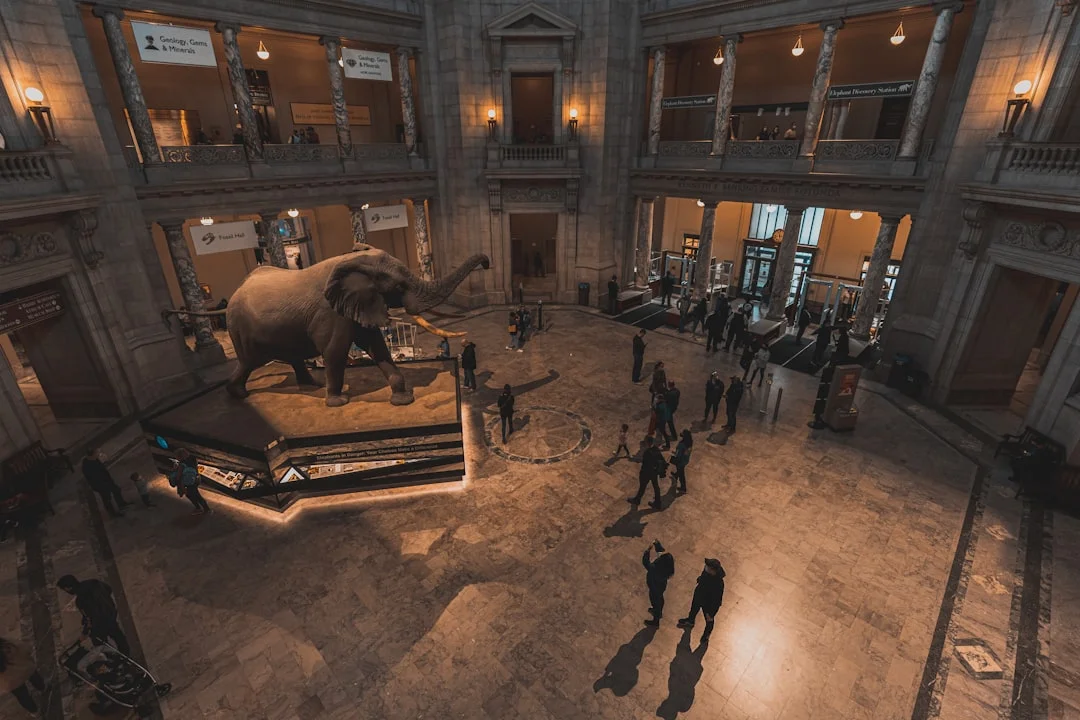
Photo by J. Amill Santiago on Unsplash
Among global museum audiences, multilingual access is increasingly cited as essential. For example, AI-enabled voice capabilities are being discussed as a practical mechanism for expanding interpretive reach while maintaining accuracy and institutional framing. The Museums Association has highlighted AI-driven tools and pilots as part of a broader agenda to expand access, develop new audience experiences, and manage governance in AI-enabled contexts. As museums pilot AI marketplaces and collaborative tools, on-device transcription offerings like SaySo can play a pivotal role in delivering transcripts and translations that align with curatorial voice and scholarship. (museumsassociation.org)
Multilingual interpretation and staff workflows
Real-time translation across 100+ languages supports international audiences and multilingual staff. In practice, museums can deploy SaySo to transcribe live talks, translate wall-text scripts for staff, and generate text-based records of tours for accessibility. The enterprise-focused features—smart formatting of spoken lists, automatic structuring of key points, and a robust personal dictionary—also help museum teams produce consistent, publication-ready materials from spoken notes. The combination of real-time translation, domain-specific terminology support, and local processing makes SaySo a practical option for documentation and curation workflows that require both speed and fidelity. (SaySo materials; product pages). (sayso.ai)
Privacy, governance, and the broader ecosystem
Privacy posture matters to museums that handle sensitive materials or operate under strict governance frameworks. On-device transcription reduces cloud data exposure, addressing concerns about data ownership, access controls, and cross-border data flows. This aligns with a broader industry movement toward edge AI and privacy-preserving approaches, a trend covered by industry reports and museum sector discussions in 2026. For example, technology market analyses and museum associations have noted a growing emphasis on responsible AI deployment, governance, and the need to balance innovation with accuracy and standards. (Twilio trend context; Museums Association pilot programs; UNESCO report). (sayso.ai)
Section 3: What’s Next
Early pilots and benchmarks to watch in museums
As AI initiatives mature across the museum sector, several developments are poised to shape how Voice AI tools are adopted:
- AI marketplace pilots: Museums Association reports that an operational platform is expected to launch in the summer of 2026, initially involving a dozen cultural institutions. This pilot is designed to explore AI-enabled collaborations across collections, interpretation, and public engagement. The results will offer benchmarks for accessibility, translation quality, and workflow integration in museum contexts. (Museums Association; AI marketplace pilot). (museumsassociation.org)
- Multimodal and multilingual experiences: Beyond transcription, museums are experimenting with AI-assisted tours, multilingual interpretation, and conversational engagement that can be paired with voice-to-text workflows for curator notes and exhibit documentation. Publications and industry coverage in 2026 highlight the growing interest in AI-assisted interpretation as a complement to traditional docent-led experiences. (The Art Newspaper coverage; AI culture discourse). (theartnewspaper.com)
- Real-world case studies: Institutions exploring AI-enabled accessibility and interpretation, including interactive exhibitions and digital guides, are reporting early pilot results and lessons learned. These case studies will inform best practices for content standards, translation fidelity, and museum staff training. (Museums Association case studies; ICOM and UNESCO discussions). (museumsassociation.org)
For SaySo, expect continued emphasis on on-device performance, broad language coverage, and real-time translation capabilities that align with museum needs for accurate terminology and consistent formatting. The enterprise trajectory highlighted by SaySo’s 2026 communications positions the platform as a scalable option for translating and transcribing museum talks, staff notes, taxonomy lists, and curatorial memos across tools and channels, while keeping data local and under institutional governance. (SaySo materials; March 2026 updates). (sayso.ai)
How museums can prepare: practical steps for adoption
To maximize the value of Voice AI for Museums and Cultural Institutions, institutions can take a staged approach:
- Define accessibility objectives: Identify key programs (gallery talks, lectures, family programs) where on-demand transcription and multilingual translation would most impact visitors with varied language preferences or hearing access needs. Align these objectives with existing accessibility plans and interpretive goals.
- Map staff workflows and tools: Document common workflows where voice-to-text can speed production, such as transcription of lecture transcripts, wall-label drafting, staff meeting notes, and exhibition press materials. Ensure SaySo integration with core applications (email, documents, browsers) aligns with daily routines.
- Build a domain dictionary: Create a personal dictionary for institution-specific terminology, artist names, exhibition titles, curatorial terminology, and place names. This reduces misinterpretations and helps produce consistent transcripts for publication and accessibility materials.
- Pilot in controlled settings: Start with a single program or gallery talk, evaluating transcription accuracy, translation quality, and the impact on post-production time. Use the results to refine workflows and language models before broader rollout.
- Establish privacy and governance checks: Leverage on-device processing to minimize data exposure and implement internal guidelines for data handling, retention, and access controls. This is particularly important for exhibitions involving sensitive content or private collections.
- Measure outcomes: Track metrics such as transcription speed, post-production time saved, visitor accessibility feedback, and multilingual content reach. Use these data points to justify broader adoption and to refine the implementation plan.
SaySo’s on-device approach, multilingual capabilities, and smart formatting make it a practical candidate for museums seeking speed, accuracy, and privacy in voice-to-text workflows. For readers exploring the tool, SaySo maintains a clear value proposition around real-time transcription with minimal post-editing and support for 100+ languages, all designed to work across standard productivity apps. (SaySo product pages; March 2026 communications). (sayso.ai)
Closing
In an era when museums are expanding digital engagement, SaySo’s March 2026 on-device transcription update provides a concrete pathway to improve accessibility, multilingual interpretation, and internal documentation without compromising privacy. By delivering high-quality transcription, real-time translation, and structured text from spoken content, SaySo can help cultural institutions create more inclusive visitor experiences while supporting staff workflows and content production. As museums continue to explore AI-driven interpretive tools, the balance of accuracy, governance, and user experience will determine which solutions endure. To stay updated on SaySo’s latest features and market context, institutions should monitor SaySo’s official communications, along with industry reports and pilot results from the museum sector’s AI initiatives. (SaySo materials; Museums Association pilots; UNESCO AI culture guidance). (sayso.ai)
In the months ahead, observers should watch for practical case studies from participating museums, benchmarks on translation fidelity across languages, and workflows that demonstrate measurable improvements in accessibility and efficiency. The convergence of on-device transcription, real-time translation, and domain-specific terminology management offers a tractable path for cultural institutions seeking reliable, privacy-conscious voice solutions that respect curatorial voice and scholarly framing. As SaySo continues to evolve, SaySo voice-to-text technology is poised to become a standard tool in the museum practitioner’s toolkit, helping museums bring more of their collections, stories, and research to diverse audiences in accessible, engaging ways. For those evaluating tools, a careful comparison of privacy posture, language coverage, and workflow integration will be essential to choosing a solution that not only transcribes well but preserves the integrity of museum content and the expertise of its staff. SaySo (https://sayso.ai) remains a central player in this evolving landscape, offering practical capabilities designed to meet real-world museum challenges with clarity and reliability. (sayso.ai)
Author
2026/07/22